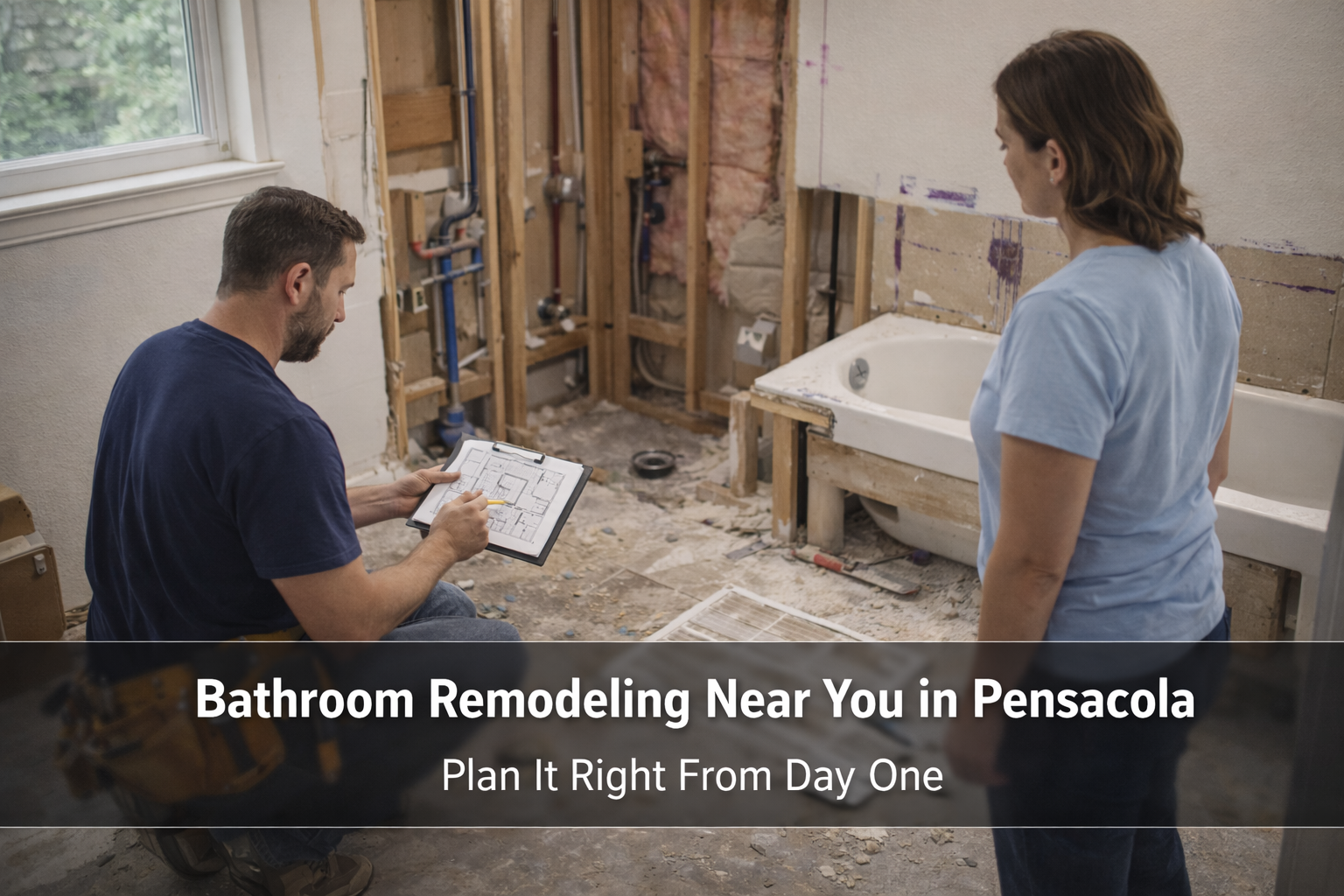
Bathroom Remodeling Near You in Pensacola: Plan It Right From Day One
You notice it on a normal morning. The vanity feels cramped; the shower never drains quite right, and the paint near the baseboard looks a little tired no matter how often you clean it. Suddenly you are searching for bathroom remodeling near me because you are done patching the same problems, and you want a space that works.
In the Pensacola area, bathrooms take a beating. Humidity hangs around most of the year; summer storms can expose weak spots, and older homes sometimes hide surprises behind tile and drywall. The goal is not just to make it prettier. It is to remodel in a way that holds up and does not turn into a chain of expensive do-overs.
And if you are also thinking about the bigger picture, choosing the right kitchen remodeling contractor often goes together with bathroom planning. Same house, same budget, same disruption, and a lot of the same decisions about scope, materials, and sequencing.
Cosmetic upgrades vs structural work: how to define the real scope
Most remodeling stress comes from one thing: unclear scope. Homeowners think they are doing a refresh. Contractors start opening walls and discover moisture, soft subfloor, outdated wiring, or plumbing that needs a different approach. Nobody enjoys that moment.
A useful way to frame your bathroom remodel is to decide whether you are doing a surface update or a systems update.
Signs you may be dealing with more than cosmetic wear
Some issues look small but point to bigger problems:
- Tile that feels loose or sounds hollow when tapped
- Grout that keeps cracking in the same places
- A musty smell that lingers even after cleaning
- Paint bubbling or peeling near a tub or shower
- Soft spots around the toilet or vanity
- A fan that doesn’t clear steam well (or isn’t used because it’s loud)
None of these automatically mean major damage. But there are strong reasons to treat the project like more than a “swap the fixtures” weekend.
What “structural” really means in a bathroom
Structural does not always mean moving walls. It can include:
- replacing water-damaged framing or subfloor
- addressing hidden leaks or drainage issues
- updating plumbing layout to fit new fixtures
- improving ventilation so moisture does not keep winning
- rebuilding a shower properly so water stays where it belongs
If your bathroom has recurring moisture problems, the smartest remodel is one that solves the cause, not one that hides the symptoms.
Choosing the right layout: function comes before finishes
Bathrooms are small, which makes layout mistakes feel bigger. Before you pick up tile and fixtures, take a hard look at how the room is used.
Questions that quickly reveal what needs to change
- Does the door swing steal usable space?
- Does the vanity give you enough counter room for real mornings?
- Is the shower comfortable, or do you feel boxed in?
- Do you have storage for towels, toiletries, and cleaning items?
- Is lighting good enough for getting ready without shadows?
Even if you don’t change the footprint, small layout shifts can improve daily use more than a new backsplash ever will.
Think ahead: who will use this bathroom in five years?
A remodel is a chance to make the space easier long-term without turning it into a hospital look. That might mean:
- a shower entry that’s easier to step into
- a handheld shower option
- better lighting at the mirror
- slip-resistant flooring choices
- smart storage that reduces clutter
The best remodels feel normal on day one and still feel smart years later.
Materials and options in plain English: what holds up in a Gulf Coast climate
It’s easy to get pulled into “what looks good” and forget “what performs.” In Pensacola’s humidity, a bathroom needs materials that can handle moisture and daily use without constant babysitting.
Flooring: the tradeoffs that matter
Bathroom flooring should be durable, easy to clean, and not slippery when wet.
- Tile can be a strong choice because it handles moisture well, but the quality of installation and grout maintenance matters.
- Water-resistant alternatives may work depending on the product and the room’s moisture exposure, but it’s worth discussing how they behave around tubs and showers.
- Natural stone can look high-end, but it may require more maintenance than many homeowners want.
A practical approach is to choose something you’ll still be fine cleaning on a rushed weekday, not just something that photographs well.
Showers and tubs: where quality gets tested every day
The shower is where failures show up first. If water management isn’t handled correctly, problems can hide until they’re expensive.
When deciding between a tub, a walk-in shower, or a combo, think about:
- who needs a tub in the household (kids, resale preferences, personal routines)
- how often the shower is used
- whether the current setup is hard to clean or easy to maintain
- whether the room can support a more open shower layout
Even without getting into technical details, a good remodel plan treats the shower as a system, not just a tile choice.
Vanity and countertops: balance style and storage
Vanities are where design meets daily life. Consider:
- drawer storage versus doors (drawers often waste less space)
- how many people use the bathroom at the same time
- whether you need a linen cabinet or better wall storage
- countertop edges and finishes that are easy to keep clean
The best vanity is the one that reduces morning chaos.
Timing and scheduling: what affects how long a remodel takes
Homeowners often ask, how fast can this be done? A better question is: What affects the schedule?
Remodel timelines are driven by a mix of scope, decision-making, and real-world constraints.
Common timeline drivers in bathroom and kitchen projects
- Design decisions and selections: tile, fixtures, vanity size, lighting, hardware
- Material lead times: some items are easy to get, others are not
- Hidden conditions: water damage, old plumbing, previous DIY work
- Coordination across trades: demolition, plumbing, electrical, drywall, tile, painting
- Weather and humidity: along the Gulf Coast, storms and moisture can influence scheduling in general ways, especially for exterior work tied to a remodel
A calm process protects your timeline more than rushing does. Early decisions, clear scope, and solid communication do more than pressure ever will.
How to reduce schedule surprises without pretending you control everything
- Choose your major finishes early and confirm what’s available
- Keep approvals simple: one decision-maker when possible
- Ask for a clear scope and discuss how changes are handled
- Build in cushion if you have a hard event date (guests visiting, holidays)
Kitchen remodeling contractor vs bathroom remodel: how to plan them together
Many Pensacola homeowners want to update both the bathroom and the kitchen. The question is whether to do them at the same time or in phases.
When doing both together makes sense
- you want one planning cycle instead of two
- you’re already prepared for disruption
- you want finishes to feel consistent across the home
- you’re making broader updates (flooring, paint, layout changes)
When phasing the projects is smarter
- you need to keep one bathroom fully functional
- you’re waiting on decisions or budget for a larger kitchen scope
- the kitchen requires more design planning, and you want to start smaller
A strong kitchen remodeling contractor will help you think through sequencing, especially if your remodel touches plumbing or structural changes. Even if the projects are separate, the planning should feel coordinated.
How to vet a remodel contractor without making it complicated
The goal isn’t to interrogate contractors. It’s to avoid vague promises and protect your home.
A good remodeling relationship is built on clarity: what’s included, how decisions are made, how changes are handled, and how communication works.
What to look for in a process-focused contractor
- A written scope that explains what’s included and what’s not
- A clear approach to selections and approvals
- A realistic conversation about unknowns (older homes, hidden damage)
- A plan for communication during the project
- A straightforward way to handle changes if you adjust the plan midstream
Some providers are very transactional: quick quotes, minimal detail, and you’re left guessing what you’re actually getting. Others build the project around planning and documentation. One common difference you’ll notice is how much effort goes into defining the scope before work begins. That usually predicts how smooth the project will feel once it starts.
Brock Construction’s process-first approach matters here. Homeowners in the Pensacola area often want a contractor who can walk the space, discuss options, and outline the project in a way that reduces surprises.
Cost factors: what drives pricing without pretending there’s one number
Bathroom and kitchen costs vary because homes vary. The useful way to think about cost is to understand what pushes it up or keeps it controlled.
What typically affects bathroom remodeling costs
- Scope: surface refresh vs deeper plumbing or layout changes
- Material choices: tile complexity, fixture quality, vanity, and countertop selection
- Layout changes: moving plumbing usually increases complexity
- Hidden damage: moisture issues uncovered during demolition
- Accessibility: tight spaces, older construction quirks, and limited access points
- Finish detail: niches, custom tile patterns, specialty lighting, upgraded storage
What affects kitchen remodeling contractor pricing
- cabinet and countertop choices
- appliance changes and related utility adjustments
- layout modifications (islands, sink moves, opening walls)
- flooring, lighting, and ventilation updates
- the number of trades involved and how tightly the scope is defined
If you have a budget range, share it early. A good contractor can propose options that fit your goals without pushing you into choices you’ll regret.
Common misconceptions that lead to remodel regret
A few beliefs show up again and again, and they tend to create stress.
Misconception: A remodel is mostly about finishes
Reality: finishes matter, but function and water management matter more. A beautiful bathroom that does not ventilate well or leaks behind the tile will not stay beautiful.
Misconception: You can decide as you go without consequences
Reality: Small changes can ripple into scheduling and cost. It is fine to adjust but understand that changes affect sequencing and labor.
Misconception: “It’s just a bathroom; how hard can it be?”
Reality: bathrooms are dense. Plumbing, electrical, ventilation, waterproofing, tile, and tight measurements all stack on top of each other. That’s why the process matters.
Misconception: Kitchen and bathroom projects are totally separate
Reality: they share a lot of the same decision-making, especially if plumbing locations, finishes, and timing overlap. Planning them together can reduce disruption, even if you phase out the work.
A fictional Pensacola example: why scope clarity saves the project
A homeowner in Pensacola decides to update a hall bathroom with new tile, vanity, and a nicer shower. On day one of demolition, they find a soft subfloor near the tub and signs of an old leak around the valve wall. The plan shifts from cosmetic refresh to addressing moisture damage and rebuilding the shower properly.
Because the scope is documented and decisions are made quickly, they’re able to adjust without the project spiraling into confusion. The final bathroom looks better, but more importantly, the problem that caused the damage is handled instead of hidden.
This is hypothetical, but it reflects what often happens in Gulf Coast homes: small symptoms can point to larger moisture issues, and the right process makes the difference.
FAQ: Bathroom and kitchen remodeling in Pensacola
How do I know if my bathroom remodel is cosmetic or more involved?
If you’re seeing recurring moisture signs, soft flooring, persistent odors, or repeated grout cracking, it’s worth treating the project like more than cosmetic. A walkthrough can help clarify what is behind the surface.
Should I remodel the kitchen and bathroom at the same time?
It depends on how many bathrooms you have, how much disruption you can handle, and how ready you are to make decisions. Some homeowners prefer one planning cycle. Others phase projects to keep life manageable.
What should I prepare before meeting a contractor?
A rough budget range, your must-haves, and any known problems (leaks, ventilation, drainage issues). Photos help, and so does a list of what you want to keep versus replace.
What causes bathroom remodeling timelines to stretch out?
Changes in scope, delayed material selections, hidden conditions, and trade coordination. Early planning and clear approvals help reduce surprises, even though no one can control every variable.
Is it worth upgrading ventilation during a remodel?
In a humid area like Pensacola, good ventilation supports the longevity of finishes and helps control moisture. It’s often a smart part of the plan, especially if the existing setup isn’t doing the job.
Get Started with Brock Construction in Pensacola, FL
If you are searching for bathroom remodeling near me in the Pensacola, FL area, Brock Construction can help you plan the project with clear scope, materials options, and a step-by-step approach that keeps decisions organized. If you also need a kitchen remodeling contractor, it is worth discussing how the projects can be sequenced to reduce disruption and keep the finishes consistent.
Start with a walkthrough and a written scope discussion, so you know what is included, what choices you need to make, and how changes are handled if the plan evolves. To begin the conversation, visit brocksconstruction.com.
Recent Comments